The idea was simple enough. But making it happen took an insane amount of effort.
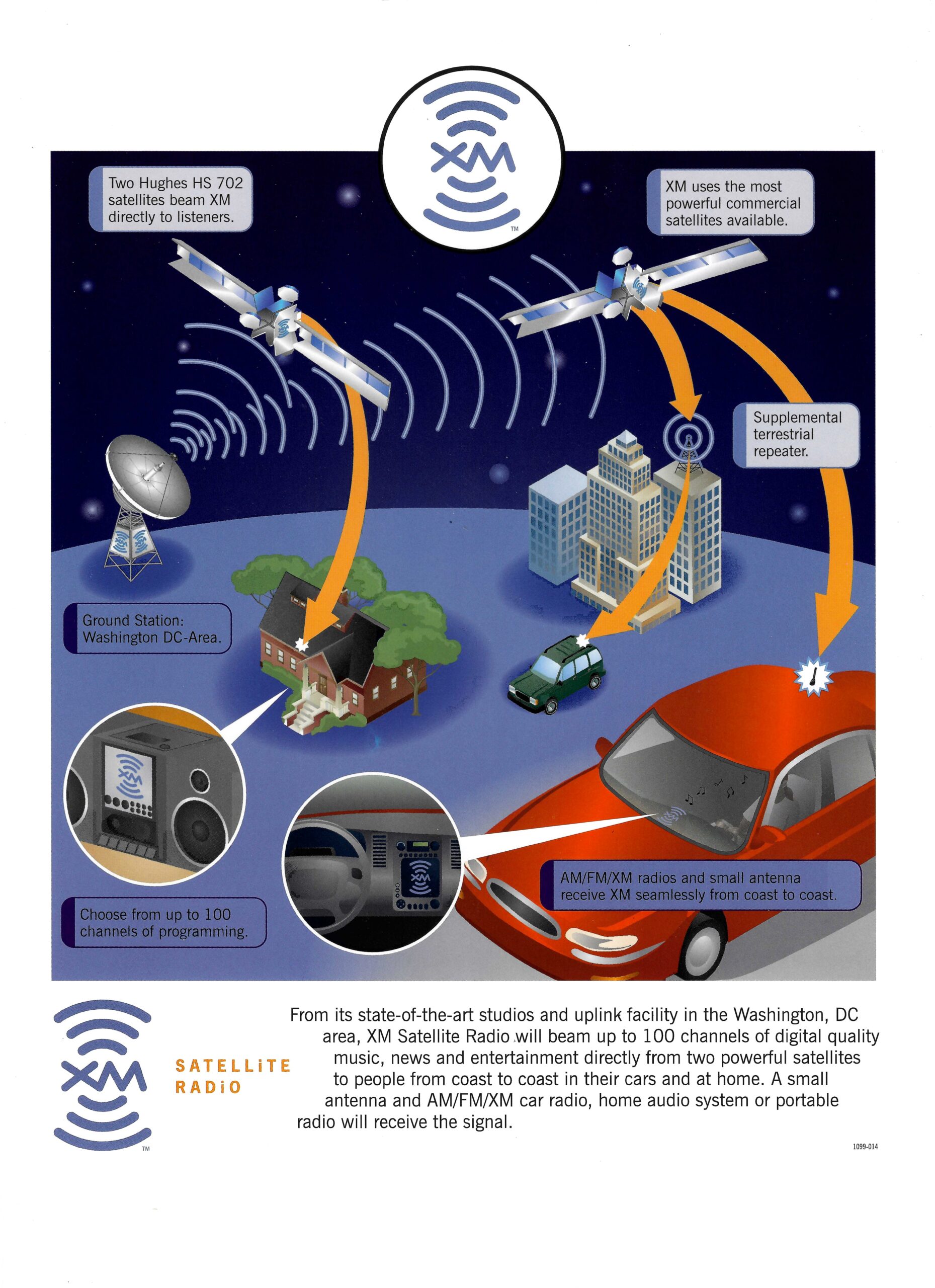
Put satellites in space powerful enough to generate a radio signal that could hit a moving car from coast-to-coast and border-to-border.
The 2001 Consumer Electronics Show, where the industry judges new products hitting the market, heaped accolades on XM. XM won the prestigious "Best of CES" award for the automotive products category. It was also a finalist in the overall "Best of Show" category.
But that was a long way from it's humble beginings.
XM Satellite Radio, Inc. was incorporated in Delaware in 1992. The FCC granted regulatory approval to XM in 1997.
During that time the company had to:
- Design and Develop the XM Radio System
- Negotiate contracts with satellite and launch vehicle operators, specialty programmers, radio manufacturers and car manufacturers
- Develop technical standards and specifications
- Conduct market research
- Secure financing for working capital and capital expenditures.
As of the year 2000, the company had raised $1.3 billion dollars. The ultimate original investment would reach $9 billion.
XM also had to assemble the right team to put something on the radio once it became operational. Lee Abrams was XM's first employee. "I Joined in 1998 when it was called American Mobile Satellite Corporation (AMRC). Everyone knew it was a terrible name. After brainstorming and hiring a naming firm, they came up with XM - following the progression from AM to FM to XM.
Lee assembled the programming team saying "We interviewed many people and 90% didn't get it, saying there was nothing wrong with radio. But the 10% who got it said radio kind of sucks, let's do something about it. We came up with AFDI - Actually Fucking Doing It - because historically people talk big at FM radio but it's all bullshit. We wanted to come up with a new direction and actually do it."
Lee said "we definitely had swagger. We talked about not letting ourselves get into a satellite inferiority complex. Our attitude was we're big, badass nationwide. Swagger was quickly injected into the whole culture. We had to have an attitude as a newcomer - not a mean attitude but a "we're badass" attitude. AFDI - if you don't believe us, listen to the stations."
Lee said it was about creation and attention to detail as much as it was about the technology "we really paid attention to the characteristics of the audience for each format - cult versus fringe listeners. Cult listeners live and die for that channel, fringe listeners switch around. We treated every channel like an individual radio station. One big mistake Sirius made early on was all their channels sounded the same. Ours were distinctly different, programmed by characters who really lived that format."